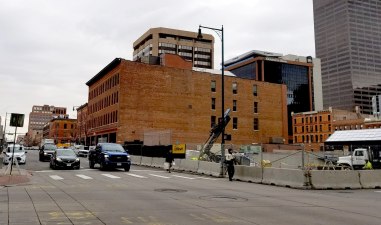
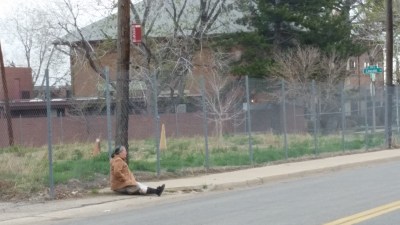
Here's an idea: Take space typically reserved for cars and give it to people walking. There's usually more than enough room to build a temporary walkway.
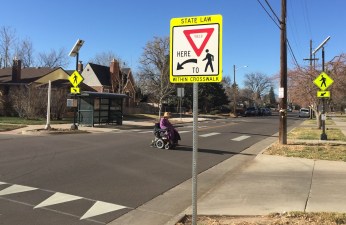
Back in May, Denver Public Works installed a "rapid flashing beacon" at 30th and Downing. The signals, meant to get drivers to yield to people walking and using wheelchairs, are up and running at five more crosswalks around the city.
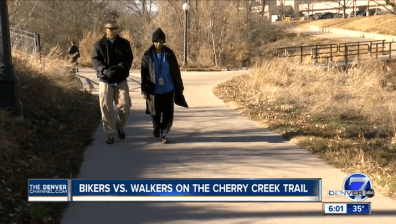
The TV news got an important piece of the problem right -- the trail is, at times, too narrow to pass comfortably. Unfortunately that fact was obscured by an exaggerated conflict between what you would think are two warring political parties.
It will take Denver 440 years to create a seamless citywide sidewalk network at current funding levels, but don't look to the Hancock administration's newly released Denver Moves Pedestrians & Trails draft plan for a strategy on how to get there this century.
A Denver law that lays the responsibility of public sidewalks at the feet of private homeowners won't change any time soon, but the city will soon have a fund that helps residents pay for repairs.
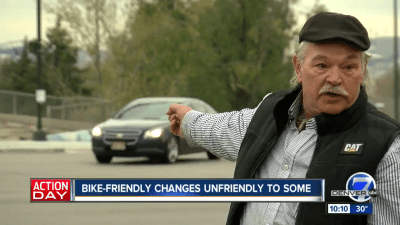
In a segment that aired yesterday, reporter Jackie Crea interviewed a guy who doesn't like changes meant to calm traffic speeds and improve conditions for walking and biking at the intersection of Morrison Road, Alameda Avenue, and Knox Court.